Encyclopedia · Time and power
Seleucid Empire
Hellenistic-era Greek state in Western Asia (312–63 BC).249 years of history.
On the timeline of history
Subjects and citizens: Seleucus I Nicator (358 BC–281 BC), Antiochus III the Great (≈242 BC–187 BC), Antiochus IV Epiphanes (≈215 BC–164 BC), Antiochus I Soter (324 BC–261 BC)
Succession
Facts
- Population
- 35,000,000
- Capital
- Lysimachia
- From
- 312 BC
- To
- 63 BC
- Country coordinates
- 33.1° · 44.5°
Fields in this country
Left — born here, right — died here.
- 5Politics
Timeline by century
How many notable people were born and died here in each century.
- 12nd century BC
Subjects and citizens · 53
Show all (53)- S. I. Nicator358 BC–281 BC
- Antiochus III the Great≈242 BC–187 BC
- Epiphanes≈215 BC–164 BC
- A. I. Soter324 BC–261 BC
- Theos286 BC–246 BC
- Megasthenes≈350 BC–290 BC
- Callinicus265 BC–225 BC
- D. I. Soter187 BC–150 BC
- Berossus
- Philopator217 BC–175 BC
- Ceraunus243 BC–223 BC
- Thea164 BC–121 BC
- Mattathiasd. 166 BC
- Antiochus V≈173 BC–162 BC
- D. I. Nicator161 BC–125 BC
- Sidetes159 BC–129 BC
- Balasd. 145 BC
- Damascus64 BC–4
- Tryphond. 138 BC
- Philoromaeusd. 50 BC
- Ascalon130 BC–68 BC
- Cyzicenus135 BC–95 BC
- Asiaticus85 BC–64 BC
- Apphusd. 143 BC
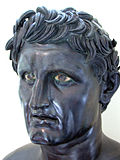


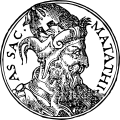


Photo: Wikimedia Commons
Members of the dynasty · 9
- Nicator358 BC–281 BC
- Philoromaeusd. 50 BC
- Asiaticus85 BC–64 BC
- Philadelphus125 BC–83 BC
- Eucaerusd. 88 BC
- S. V. Epiphanesd. 94 BC
- Dionysusd. 84 BC
- A. X. Epiphanes≈110 BC–92 BC


Seleucus V (d. 125 BC)
Photo: Wikimedia Commons
Born here · 5
Show all (5)
Photo: Wikimedia Commons
Founders · 1
Photo: Wikimedia Commons
See also
In short
Seleucid Empire — Hellenistic-era Greek state in Western Asia (312–63 BC). Existed 312 BC–63 BC (249 years). Capital — Lysimachia. Population — 35,000,000. Subjects and citizens: Seleucus I Nicator, Antiochus III the Great, Antiochus IV Epiphanes, Antiochus I Soter, Antiochus II Theos and Megasthenes. Members of the dynasty: Seleucus I Nicator, Philip II Philoromaeus, Antiochus XIII Asiaticus, Philip I Philadelphus, Demetrius III Eucaerus and Seleucus VI Epiphanes. Born here: Philip I Philadelphus, Demetrius III Eucaerus, Seleucus VI Epiphanes, Laodice IV and Laodice V.
Data — Wikidata (CC0): dates, places and links as in the source. Portraits — Wikimedia Commons. Map borders are modern (Natural Earth).
How we counted
Dates, links, participants and rulers come from Wikidata: heads P35/P6 and holders of head offices, parts P361, participants P710, predecessors and successors P1365/P1366/P155/P156.
Duration is in full years between start and end; for existing ones — up to the current year.
People by role — up to 24 best known in the role; the number is how many in total.
This is a sample of our base, not all of history: Wikidata covers Europeans, men and the 19th–20th centuries best.
Data: Wikidata (CC0); portraits: Wikimedia Commons (each file has its own licence).