Encyclopedia · Time and power
President
Leader of a country or part of a country, usually in republics.Office — 1,466 people in the data.
Who held office in the selected year?
Height shows the number of dated terms. A term with only one known date is shown in that year.

Succession
- Bolívar1783–1830
- Gorky1868–1936
- Miller1915–2005
- Monacob. 1958
- Laplace1749–1827
- Eiffel1832–1923
- Navratilovab. 1956
- Sihanouk1922–2012
- Kim Dae-jung1924–2009
- de Tocqueville1805–1859
- Galsworthy1867–1933
- Strutt1842–1919
- Tsiprasb. 1974
- Philippeb. 1970
- Maeterlinck1862–1949
- Lacan1901–1981
- Bourdieu1930–2002
- Mistral1830–1914
- Zourabichvilib. 1952
- Rodriguezb. 1969
- Fillonb. 1954
- Joliot-Curie1900–1958
- Lassalle1825–1864
- Montagnier1932–2022

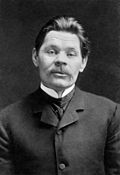

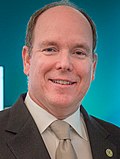


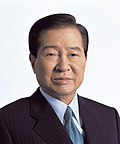


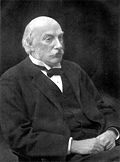




Photo: Wikimedia Commons
In short
President — Leader of a country or part of a country, usually in republics. Office holders: Simón Bolívar, Maxim Gorky, Arthur Miller, Albert II, Prince of Monaco, Pierre-Simon Laplace and Gustave Eiffel.
Data — Wikidata (CC0): dates, places and links as in the source. Portraits — Wikimedia Commons. Map borders are modern (Natural Earth).
How we counted
Dates, links, participants and rulers come from Wikidata: heads P35/P6 and holders of head offices, parts P361, participants P710, predecessors and successors P1365/P1366/P155/P156.
Duration is in full years between start and end; for existing ones — up to the current year.
People by role — up to 24 best known in the role; the number is how many in total.
This is a sample of our base, not all of history: Wikidata covers Europeans, men and the 19th–20th centuries best.
Data: Wikidata (CC0); portraits: Wikimedia Commons (each file has its own licence).