Who is famous where
The home heroes of the English Wikipedia: Adams, Hasan and Zacharia — read in English at least 52 times more than in other languages
Languages to compare (at least two)
The data covers four Wikipedias: Russian, English, Spanish and Portuguese

1902–1984
Read in English 394 times more than in the others
Locality index — 0.9
- EN96%
- RU0%
- ES1%
- PT0%
- DE1%
- JA0%
- FR0%
- IT1%
- NL1%
- SV0%
- KO0%
- hi0%
- zh0%
EN 2,476,857 · RU 313 · ES 935 · PT 278 · DE 1,404 · JA 459 · FR 589 · IT 629 · NL 224 · SV 66 · KO 59 · zh 268
Photo: Wikimedia Commons
locality index: 0 — equally everywhere, 1 — in one language only. Only the extremes are shown — home heroes and the known everywhere; the middle is empty not because nobody is there
- EN
- RU
- ES
- PT
- DE
- JA
- FR
- IT
- NL
- SV
- KO
- hi
- zh
Languages to compare (at least two)
1902–1984
Read in English 394 times more than in the others
Locality index — 0.9
- EN96%
- RU0%
- ES1%
- PT0%
- DE1%
- JA0%
- FR0%
- IT1%
- NL1%
- SV0%
- KO0%
- hi0%
- zh0%
EN 2,476,857 · RU 313 · ES 935 · PT 278 · DE 1,404 · JA 459 · FR 589 · IT 629 · NL 224 · SV 66 · KO 59 · zh 268
Photo: Wikimedia Commons
The home heroes of each Wikipedia
Known worldwide (20+ articles), but read mostly in one language — many times more than in the others.
- EN
- RU
- ES
- PT
- DE
- JA
- FR
- IT
- NL
- SV
- KO
- hi
- zh
English Wikipedia


Russian Wikipedia


Spanish Wikipedia


Portuguese Wikipedia


German Wikipedia


Japanese Wikipedia


French Wikipedia


Italian Wikipedia


Dutch Wikipedia


Swedish Wikipedia


Korean Wikipedia


Wikipedia (hi)




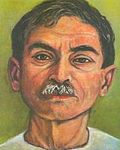

Wikipedia (zh)


Known everywhere
The highest weakest share: read almost equally in every compared language.


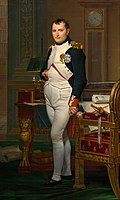


The most uneven
There is an article in every compared language — yet it is read almost only in one.


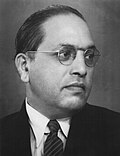


See also
More on reader interest
- Pulse of interestWho drew unusually many readers this month — and why: a death, a round anniversary, or no known reason
- Who is being forgottenHistorical fame against today’s interest: forgotten celebrities and the evergreen
- The world in year XScrub from 1500 to 2026: who ruled, who was alive and which wars were raging.
How we counted
A language’s share is the median monthly views of the article per million views of that whole Wikipedia (English is 40 times larger than Portuguese — absolute numbers aren’t comparable), smoothed by 0.05. Shares across the compared languages add up to 100%.
Locality index = 1 − H / ln k, where H is the entropy of shares and k the number of languages: 0 — read equally everywhere, 1 — in one language only. On the compass it is the distance from the centre; the angle points to the largest share, tilted towards the second one.
“Home heroes” — the language with the largest share, at least 3 times the geometric mean of the others; ordered by interest in that language and the lead. “Known everywhere” — by the weakest share across languages. Sample — people with 20+ Wikipedia articles.
The data is one month of page views (October 2026): a one-off news story can push a person towards a pole. With a year of data, shares will become a 12-month median.
The data covers four Wikipedias: Russian, English, Spanish and Portuguese
79,533 people with 20+ articles · 13 languages compared
This is a sample of our base, not all of history: Wikidata covers Europeans, men and the 19th–20th centuries best.
Page views — Wikimedia pageviews dumps (CC0), people only (agent=user); articles and dates — Wikidata (CC0); portraits — Wikimedia Commons.