Encyclopedia · Time and power
Palaiologos
Byzantine imperial family.62 members on the timeline, born from 1404 (Konstantinos XI Palaiologos) to 1259 (Q61017906). Reigns: 14.
The house on the timeline
Hover over a line for years and reigns; click to open the profile
- Literature
- Politics
- Science
- Religion
- Military
- Other
The timeline shows the 51 best known of 62; all are listed below.
Kinship
Members · 62
Page 1 of 4
- Konstantinos XI Palaiologos1404–1453Byzantine Empire
- Michael VIII Palaiologos1224–1282Byzantine Empire
- John V Palaiologos1332–1391Byzantine Empire
- Manuel II Palaiologos1350–1425Byzantine Empire
- Andronikos II Palaiologos1259–1332Byzantine Empire
- Andronikos III Palaiologos1297–1341Byzantine Empire
- John VIII Palaiologos1392–1448Byzantine Empire
- Andronikos IV Palaiologos≈1348–1385Byzantine Empire
- John VII Palaiologos1370–1408Byzantine Empire
- Michael IX Palaiologos1277–1320
- Sophia Palaiologina1455–1503
- Thomas Palaiologos1409–1465
- Helena Dragaš1372–1450Byzantine Empire
- Andreas Palaiologos1453–1502
- Andronikos V Palaiologos1400–1407Byzantine Empire
- Mesih Pashad. 1501Ottoman Empire
- Demetrios Palaiologos1407–1470
- Theodoros II Palaiologos≈1396–1448


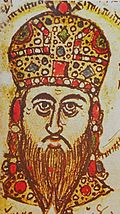




Countries and states

In short
Palaiologos — Byzantine imperial family. The site has 62 members, 1190–1543; the best known are Konstantinos XI Palaiologos, Michael VIII Palaiologos, John V Palaiologos, Manuel II Palaiologos, John VIII Palaiologos and Andronikos III Palaiologos. Rulers: Michael VIII Palaiologos, Andronikos II Palaiologos, Andronikos III Palaiologos, John V Palaiologos, Andronikos IV Palaiologos and John VII Palaiologos.
Data — Wikidata (CC0): dates, places and links as in the source. Portraits — Wikimedia Commons. Map borders are modern (Natural Earth).
How we counted
Data: Wikidata (CC0) and Wikimedia Commons (each image has its own licence — linked under the picture). The page shows only people and works that have their own page on the site; full counts come from the database. Lives without a known year of death are drawn as open lines.
This is a sample of our base, not all of history: Wikidata covers Europeans, men and the 19th–20th centuries best.
Data: Wikidata (CC0); portraits: Wikimedia Commons (each file has its own licence).