Links · seven handshakes
Peter the Great and Newton
Pick two people — the path goes through those who knew each other.

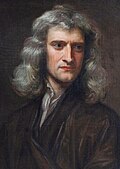
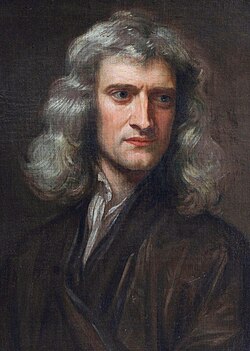
3 handshakes separate Peter the Great from Newton
One link is a shared event — they might have met.


- might have metboth were members of: French Academy of Sciences
- knew each otherstudent
- knew each otherstudent


Step by step
- 1Peter the Great → de Robervalmight have metboth were members of: French Academy of Sciences
- 2de Roberval → Barrowknew each otherstudent
- 3Barrow → Newtonknew each otherstudent
Interesting pairs
Pairs worth checking
Precomputed paths — each pair has its own page.
- Bach — Handel1 step
- Tolstoy — Dostoyevsky1 step
- Mozart — Beethoven1 step
- Shakespeare — Elizabeth I1 step
- Leonardo — Machiavelli1 step
- Lenin — Tolstoy1 step
- Curie — Einstein1 step
- Churchill — Stalin1 step
- Mendeleev — Tchaikovsky1 step
- Catherine II — Voltaire1 step
- Einstein — Monroe2 steps
- Tolstoy — Gandhi2 steps
- Pushkin — Napoleon2 steps
- Galileo — Shakespeare2 steps
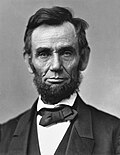
- Darwin — Lincoln3 steps
- Gagarin — Elizabeth II3 steps
- Peter the Great — Newton3 steps
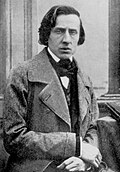
- Chopin — Sand3 steps
- Nietzsche — Dostoyevsky4 steps
- van Gogh — Rembrandt7 steps














See also
See also
- Relay of livesSix people passing the baton separate Shakespeare from today. The finish line is you.
- Ancestor fanLouis XIV’s ancestors fanned out over seven generations — and why Ferdinand II appears in it five times.
- Roots of learningTeacher → students as roots: the schools of Socrates, Maxwell and Haydn — and how many lessons separate any two people.
How we counted
Links come from Wikidata: family and marriage (P22, P25, P26, P40, P3373), teacher and student (P1066, P802, P184, P185), one band or crew, one event or organisation (P710, P607, P463), contemporaries — lived at the same time for at least 10 years and share a field or a country of birth (among well-known people only).
The path is the “strongest”, not just the shortest: family, marriage and teacher weigh 1, band and crew 1.2, a shared event or organisation 1.5 and more for large events, contemporaries 2.5–3. The search is a bidirectional Dijkstra: up to 10 handshakes, 4,000 people and 4 seconds.
“Knew each other” — family, spouses, teacher, one band or crew; “might have met” — one event or organisation; “contemporaries” — only lived at the same time. Lives more than 10 × 90 years apart are “too far” at once.
This is a sample of our base, not all of history: Wikidata covers Europeans, men and the 19th–20th centuries best.
Data: Wikidata (CC0); portraits: Wikimedia Commons (each file has its own licence).