Genre
Philosophy
Study of questions concerning being, thought, knowledge, and conduct for which no objective answers have been established, using logical reasoning.8 people on the timeline: Marquis de Sade, Eckhart Tolle and Chantal Maillard. The core were born in 1618–1974.
Representatives on the timeline
Hover over a line for the lifespan; click to open the profile
- Literature
- Science
Works on the timeline
Key works · 56
All worksBeyond Good and EvilFriedrich Nietzsche1886Photo: Wikimedia Commons The Phenomenology of SpiritGeorg Wilhelm Friedrich Hegel1807Photo: Wikimedia Commons Gay ScienceFriedrich Nietzsche1881Photo: Wikimedia Commons The Birth of TragedyFriedrich Nietzsche1872Photo: Wikimedia Commons The AntichristFriedrich Nietzsche1889Photo: Wikimedia Commons On the Genealogy of MoralityFriedrich Nietzsche1887Photo: Wikimedia Commons Meditations on First PhilosophyRené Descartes1641Photo: Wikimedia Commons The Open Society and Its EnemiesKarl Popper1945Photo: Wikimedia Commons Democracy in AmericaAlexis de Tocqueville1830Photo: Wikimedia Commons Twilight of the IdolsFriedrich Nietzsche1888Photo: Wikimedia Commons An Essay Concerning Human UnderstandingJohn Locke1690Photo: Wikimedia Commons The Guide for the PerplexedMoshe ben Maimon1190Photo: Wikimedia Commons
Representatives · 8
All representatives- de Sade1740–1814
- Tolleb. 1948
- Maillardb. 1951
- Smith1618–1652
- Kedrov1942–2025
- Fayeb. 1956
- Desmond1859–1929
- Herrerab. 1974


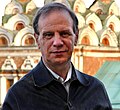


Photo: Wikimedia Commons
In short
Philosophy — Study of questions concerning being, thought, knowledge, and conduct for which no objective answers have been established, using logical reasoning. The site has 8 people; the best known are Marquis de Sade, Eckhart Tolle, Chantal Maillard, John Smith, Konstantin Kedrov and Emmanuel Faye. Key works: “Beyond Good and Evil”, “The Phenomenology of Spirit”, “The Birth of Tragedy” and “The Antichrist”.
Data — Wikidata (CC0): dates, places and links as in the source. Portraits — Wikimedia Commons. Map borders are modern (Natural Earth).
How we counted
Data: Wikidata (CC0) and Wikimedia Commons (each image has its own licence — linked under the picture). The page shows only people and works that have their own page on the site; full counts come from the database. Lives without a known year of death are drawn as open lines.
This is a sample of our base, not all of history: Wikidata covers Europeans, men and the 19th–20th centuries best.
Data: Wikidata (CC0); portraits: Wikimedia Commons (each file has its own licence).