Movement · since 1730
Classical period
Genre of Western music (c. 1730–1820).36 people on the timeline: Wolfgang Amadeus Mozart, Ludwig van Beethoven and Peter Abelard. The core were born in 1706–1906.
Members on the timeline
Hover over a line for the lifespan; click to open the profile
- Music
- Religion
Where it came from and led to
Works on the timeline
Key works
All worksRepresentatives · 36
All representatives- Mozart1756–1791
- Beethoven1770–1827
- Abelard1079–1142
- von Gluck1714–1787
- Scarlatti1685–1757
- Galuppi1706–1785
- Hasse1699–1783
- Paradis1759–1824
- Soler1729–1783
- Andsnesb. 1970
- Tomowa-Sintowb. 1941
- Grøndahl1847–1907
- Koželuch1747–1818
- Krommer1759–1831
- Gyrowetz1763–1850
- Rosetti1746–1792
- Gassmann1729–1774
- Brixi1732–1771
- Bon≈1738–1767
- Duni1708–1775
- Giordani1751–1798
- Biggs1906–1977
- Krumpholz1747–1790
- de Majo1732–1770

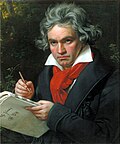
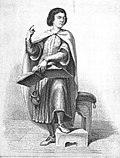


Photo: Wikimedia Commons
In short
Classical period — Genre of Western music (c. 1730–1820). The site has 36 people, since 1730; the best known are Wolfgang Amadeus Mozart, Ludwig van Beethoven, Peter Abelard, Christoph Willibald von Gluck, Domenico Scarlatti and Baldassare Galuppi. Key works: “Piano Concerto No. 23 in A major” and “Die Israeliten in der Wüste”. Predecessors: Baroque music; successors: Romantic music.
Data — Wikidata (CC0): dates, places and links as in the source. Portraits — Wikimedia Commons. Map borders are modern (Natural Earth).
How we counted
Data: Wikidata (CC0) and Wikimedia Commons (each image has its own licence — linked under the picture). The page shows only people and works that have their own page on the site; full counts come from the database. Lives without a known year of death are drawn as open lines.
This is a sample of our base, not all of history: Wikidata covers Europeans, men and the 19th–20th centuries best.
Data: Wikidata (CC0); portraits: Wikimedia Commons (each file has its own licence).