Movement · since 307 BC
Epicureanism
Philosophical movement developed by Epicurus.21 people on the timeline: Epicurus, Titus Pomponius Atticus and Philodemus. The core were born in 342 BC–110 BC.
Members on the timeline
Hover over a line for the lifespan; click to open the profile
- Literature
- Science
The timeline shows 11 of 21; all are listed below.
Works on the timeline
Key works
All worksRepresentatives · 21
All representatives- Epicurus342 BC–270 BC
- Atticus110 BC–32 BC
- Philodemus≈110 BC–35 BC
- M. o. Lampsacus331 BC–278 BC
- Sidon≈150 BC–70 BC
- Oenoanda
- Hermarchus≈325 BC–250 BC
- Colotesb. ≈320 BC
- M. o. Lampsacus≈500 BC–464 BC
- I. o. Lampsacus
- P. o. Lampsacus340 BC–278 BC
- Apollodorus the Epicurean
- T. o. Lampsacus
- Aristiond. 86 BC
- Phaedrus the Epicurean138 BC–70 BC
- Stratonicea140 BC–70 BC
- Lacon
- Siro the Epicureand. 20 BC
- L. o. Lampsacus
- Tarsus
- Albucius
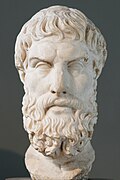


Photo: Wikimedia Commons
In short
Epicureanism — Philosophical movement developed by Epicurus. The site has 21 people, since 307 BC; the best known are Epicurus, Titus Pomponius Atticus, Philodemus, Metrodorus of Lampsacus, Zeno of Sidon and Diogenes of Oenoanda. Key works: “De rerum natura” and “Oenoanda inscription”.
Data — Wikidata (CC0): dates, places and links as in the source. Portraits — Wikimedia Commons. Map borders are modern (Natural Earth).
How we counted
Data: Wikidata (CC0) and Wikimedia Commons (each image has its own licence — linked under the picture). The page shows only people and works that have their own page on the site; full counts come from the database. Lives without a known year of death are drawn as open lines.
This is a sample of our base, not all of history: Wikidata covers Europeans, men and the 19th–20th centuries best.
Data: Wikidata (CC0); portraits: Wikimedia Commons (each file has its own licence).