Movement
Feminism
Group of movements that come about defining, and defending women liberation and gender equity.162 people on the timeline: Simone de Beauvoir, Dua Lipa and Mary Wollstonecraft. The core were born in 1854–1983.
Members on the timeline
Hover over a line for the lifespan; click to open the profile
- Literature
- Politics
- Music
- Painting
- Science
The timeline shows 40 of 162; all are listed below.
Works on the timeline
Key works
All worksRepresentatives · 162
All representatives- de Beauvoir1908–1986
- Lipab. 1995
- Wollstonecraft1759–1797
- Steinem1934–2026
- Allendeb. 1942
- Bialikb. 1975
- Greerb. 1939
- Friedan1921–2006
- Stanton1815–1902
- Nasrinb. 1962
- Paul1885–1977
- Tarbell1857–1944
- Márquezb. 1982
- Laferteb. 1983
- Waringb. 1952
- Criado-Perezb. 1984
- d'Eaubonne1920–2005
- Farrellb. 1943
- Ristb. 1962
- Ratebzad1931–2014
- Augspurg1857–1943
- Candee1858–1949
- Nomanib. 1965
- Kotchever1891–1943


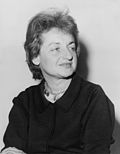


Photo: Wikimedia Commons
In short
Feminism — Group of movements that come about defining, and defending women liberation and gender equity. The site has 162 people; the best known are Simone de Beauvoir, Dua Lipa, Mary Wollstonecraft, Gloria Steinem, Isabel Allende and Mayim Bialik. Key works: “Declaration of the Rights of Woman and the Female Citizen”, “La Belle Verte”, “Feminist Coalition” and “Daughter of Earth”.
Data — Wikidata (CC0): dates, places and links as in the source. Portraits — Wikimedia Commons. Map borders are modern (Natural Earth).
How we counted
Data: Wikidata (CC0) and Wikimedia Commons (each image has its own licence — linked under the picture). The page shows only people and works that have their own page on the site; full counts come from the database. Lives without a known year of death are drawn as open lines.
This is a sample of our base, not all of history: Wikidata covers Europeans, men and the 19th–20th centuries best.
Data: Wikidata (CC0); portraits: Wikimedia Commons (each file has its own licence).