Movement
Scholasticism
Method of critical thought which dominated teaching by the academics ("scholastics", or "schoolmen") of medieval universities in Europe from about 1100 to 1700.11 people on the timeline: Thomas Aquinas, William of Ockham and Peter Abelard. The core were born in 1190–1602.
Members on the timeline
Hover over a line for the lifespan; click to open the profile
- Science
- Religion
Representatives · 11
All representatives- Aquinas1225–1274
- Ockham≈1287–1349
- Abelard1079–1142
- Bacon≈1220–1292
- Pomponazzi1462–1525
- Vanini1585–1619
- Ghent1217–1293
- Eiximenis≈1330–1409
- Mastrius1602–1673
- la Rochelle≈1190–1245
- Guthrie1901–1974


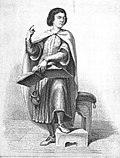
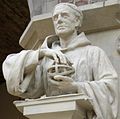


Photo: Wikimedia Commons
In short
Scholasticism — Method of critical thought which dominated teaching by the academics ("scholastics", or "schoolmen") of medieval universities in Europe from about 1100 to 1700. The site has 11 people; the best known are Thomas Aquinas, William of Ockham, Peter Abelard, Roger Bacon, Pietro Pomponazzi and Giulio Cesare Vanini.
Data — Wikidata (CC0): dates, places and links as in the source. Portraits — Wikimedia Commons. Map borders are modern (Natural Earth).
How we counted
Data: Wikidata (CC0) and Wikimedia Commons (each image has its own licence — linked under the picture). The page shows only people and works that have their own page on the site; full counts come from the database. Lives without a known year of death are drawn as open lines.
This is a sample of our base, not all of history: Wikidata covers Europeans, men and the 19th–20th centuries best.
Data: Wikidata (CC0); portraits: Wikimedia Commons (each file has its own licence).